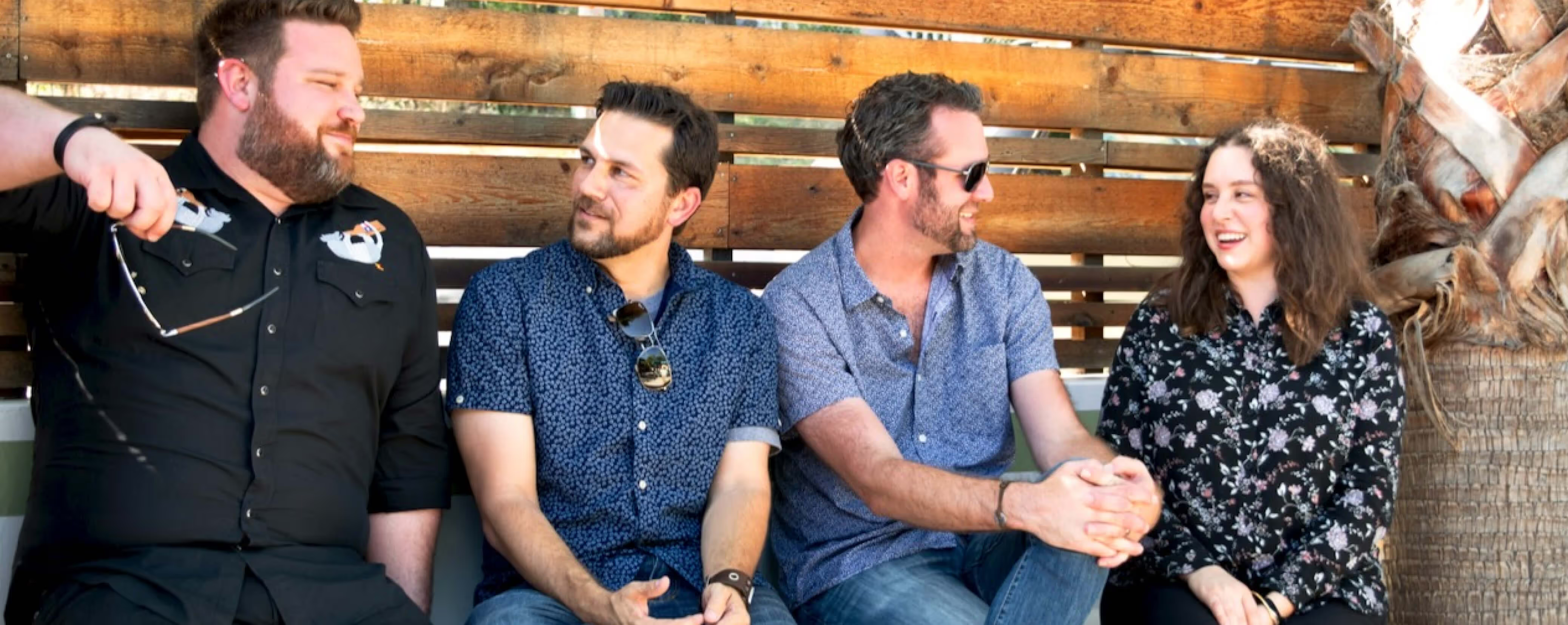
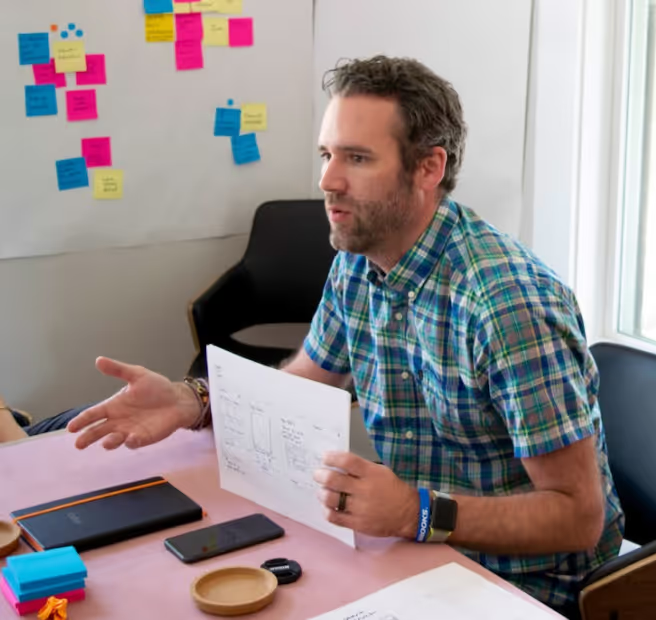
My business partner and I felt we had a clear division of labor: he owned new business development and I took on essentially everything else.
Operations, culture, client management and naturally, the design work they were paying us for. It made sense on the surface. We were leaning into our strengths. But in practice, the imbalance accumulated.
That's not a knock on him. We built strategy together and made most major decisions as a team. But the operational weight skewed toward me, and instead of addressing it structurally, I internalized it. Whenever he'd close a deal, I'd immediately ask what was next — no pause, no acknowledgment of what it took.
Fear drove that behavior. Fear of the pipeline drying up. Fear of not making payroll.
It took me too long to learn that momentum and being present aren't mutually exclusive — and that a partner who doesn't feel seen eventually becomes a partner who's hard to keep.
I didn't hire until a year in. I wanted some cash runway before committing to someone else's livelihood.
First hire: Adam, about a year of experience. On paper, a risk. In practice, one of the best calls I made. He was eager and coachable and became the testing ground test my assumptions about leadership in real time — how to run 1:1s, how to connect feedback to growth, how to build culture intentionally.
If there was a through-line to how I led, it's this: freedom in a framework. Process matters, but it has to leave room for how people actually work. Give people the rails, then get out of the way.
6
peak team size
$1.5M
total revenue
4
years in business
What I also learned, the expensive way, was that coaching has limits.
A later hire — our most senior, brought in to fill a genuine gap in our practice — was talented but inconsistent.
I treated every missed expectation as a coaching moment. What I failed to account for was the cumulative toll: on me, on the team, on the culture I'd worked hard to build.
When I finally made the call to let him go, it reframed something important for me. Sometimes the most generous thing you can do for someone is stop trying to force a fit that isn't there, and let them find an environment where they can actually thrive.
One of our first international clients was a healthcare startup based in the UK, looking to enter the US market.
We were brought in to do user research — exploring their product and how certain patterns and language might translate across cultures. It was meaningful work, and they were genuinely pleased with our initial output.
In our excitement, we did what we always did — shared a generalized version of the project publicly to build credibility. Our contract allowed it. We were careful. We thought we were on solid ground.
They felt otherwise.
We took the post down immediately, but the relationship never recovered.
What I took from it had nothing to do with contracts. Shared understanding isn't the same as confirmed understanding. A conversation before we published would have cost us nothing. Skipping it cost us a client.
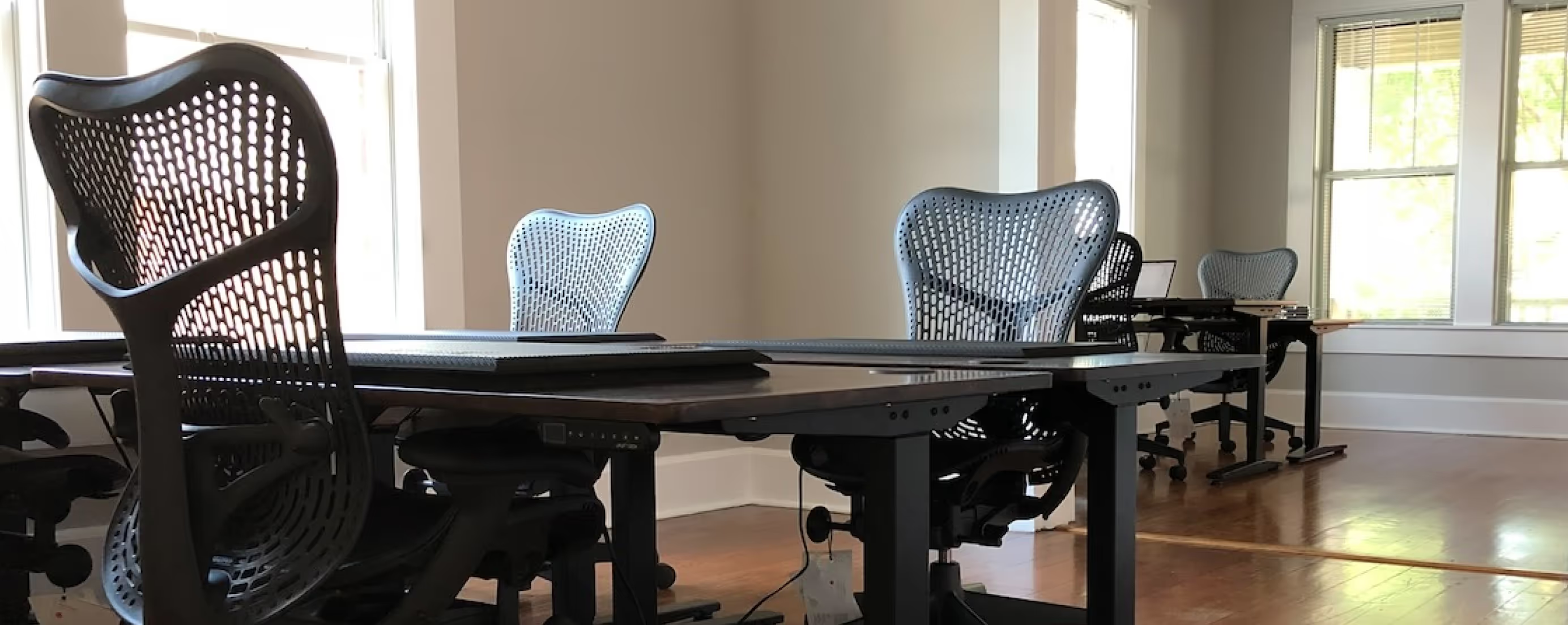
In 2018 we signed a lease on a building in East Austin. The pipeline looked healthy. We wanted roots — a place to host events, give back to the design community.
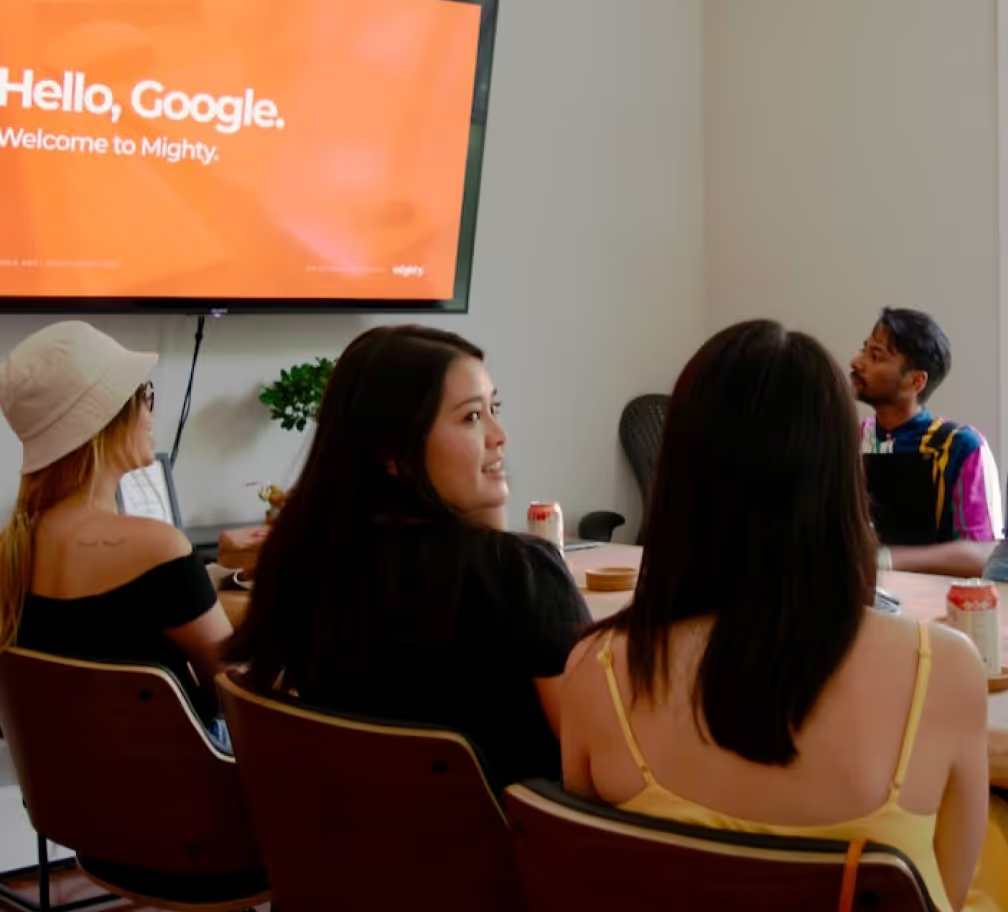
For about a year, it was everything we'd hoped it would be. We hosted a team from Google during Austin Design Week and invited other agencies in to share the space — choosing community over competition.
Then 2019 hit. The pipeline went quiet what felt like almost overnight. Leads began ghosting us. Active projects were wrapping up without new ones behind them. We went from our most optimistic moment as a company to burning through our reserves within months.
We cut our pay. Painfully had to trim the team. We saw one last client engagement through — and then we closed the doors in December 2019.
Then 2019 hit. The pipeline went quiet what felt like almost overnight.
The hardest part wasn't the financial pressure, as real as that was. It was the whiplash. We felt we had done everything right. We'd been patient, smart, and intentional. We'd finally bet on ourselves — and then the floor dropped out from under us.
A dream, more than a decade in the making, gone.
Founding Mighty forced me into situations no job description or management book could manufacture.
How to hold a partnership together under pressure. How to build a team culture from scratch and watch it actually work. How to know when coaching becomes avoidance. How to protect your business without torching a relationship.
I still don't think I've fully processed all the effects Mighty has had on me.
But I know it made me a different kind of designer and a different kind of leader. One who's not only done the work, but can appreciate the sacrifices and compromises it takes to do it successfully.