


A kid never forgets his first Dodger dog.
It all started with drawing. Comic book characters, LEGO, anything I could make or take apart. The curiosity never really changed... just the materials.
Design school, a few years in advertising, and then a realization that changed the whole trajectory: I didn't want to design things people passively observed. I wanted to build things they'd actually use.
The web made that possible. Product design was just following that instinct as far as it would go.
01
different stakes, same habit
Twenty years later the trifecta is still the same — art, technology, and genuine curiosity about how people think about what they need.
Most of my career has been an excuse to keep doing that at a bigger scale. Co-founding an agency meant learning how a business actually runs — payroll, legal, the unglamorous machinery behind every client win nobody puts in a case study.
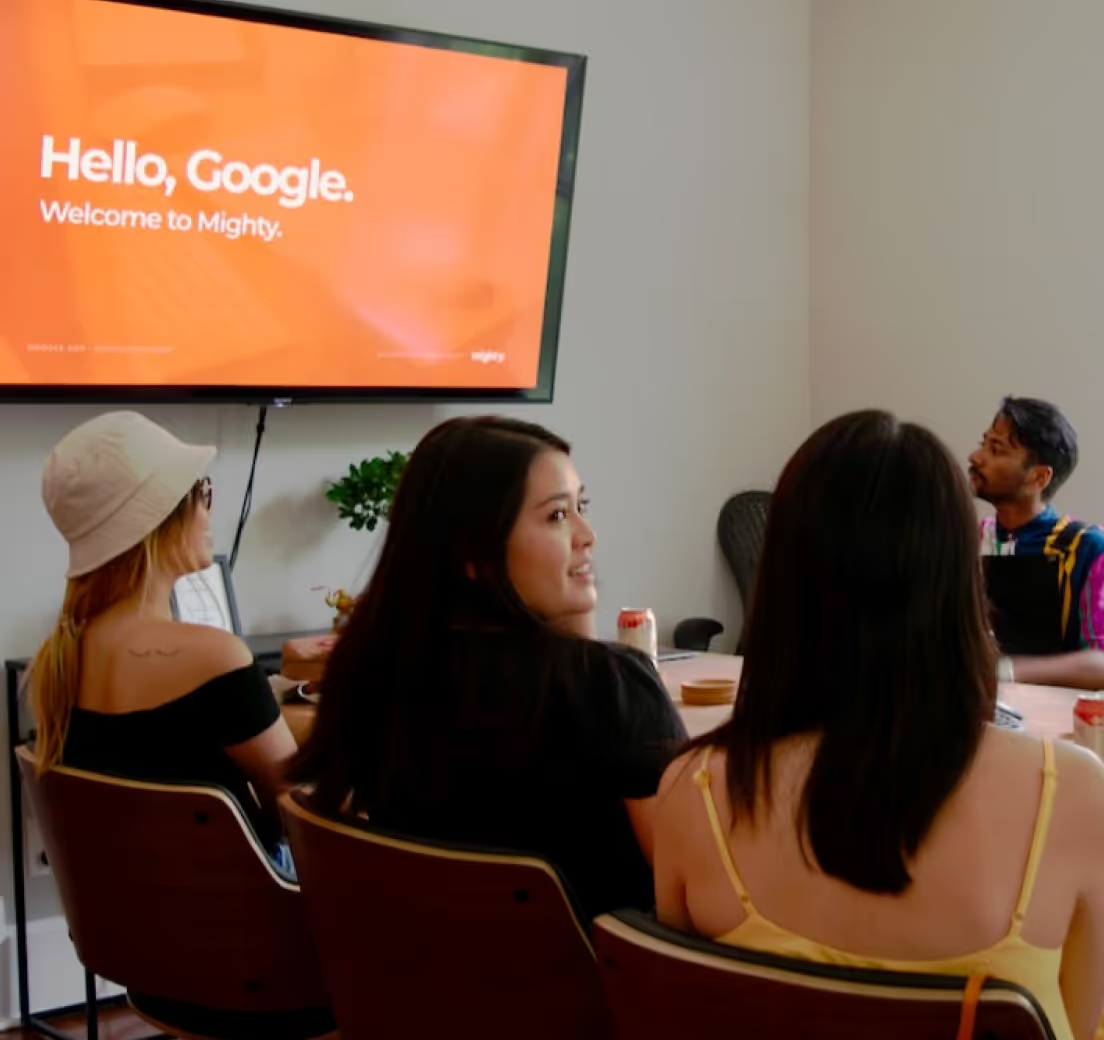
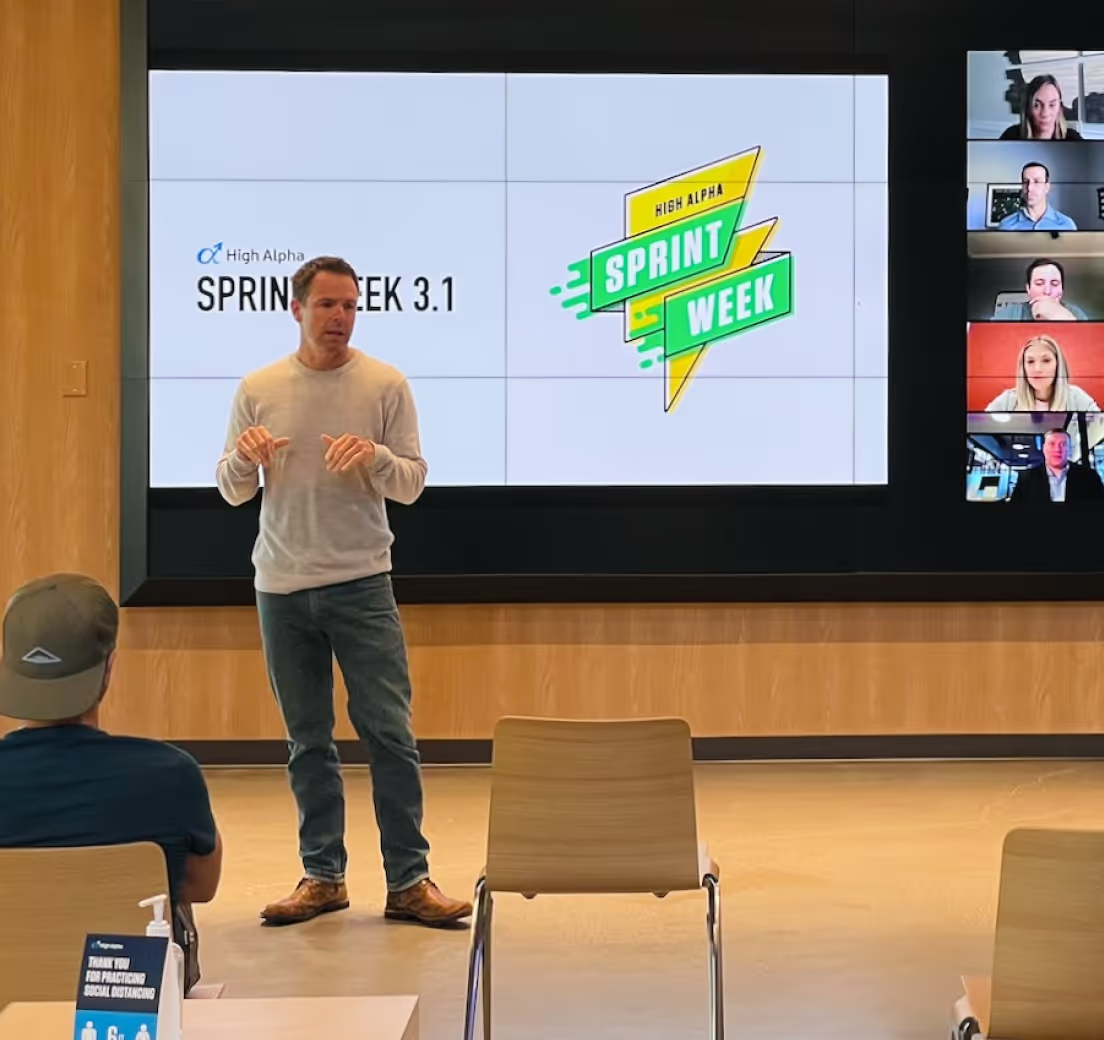
A venture studio handed me a brand-new founding team every few months, which meant learning how trust actually forms when you don't have the luxury of time to earn it slowly.
Different rooms, different stakes, same habit: understand the thing up before starting to fix it.
02
Outside the work
These days that curiosity is focused on AI and what it means for how designers ideate, build, and make decisions together.
I'm less interested in AI as a speed tool and more interested in what it changes about the quality of thinking a team can do before anything gets shipped. I build with it the way I design: as a real thinking partner, not a shortcut to an answer.


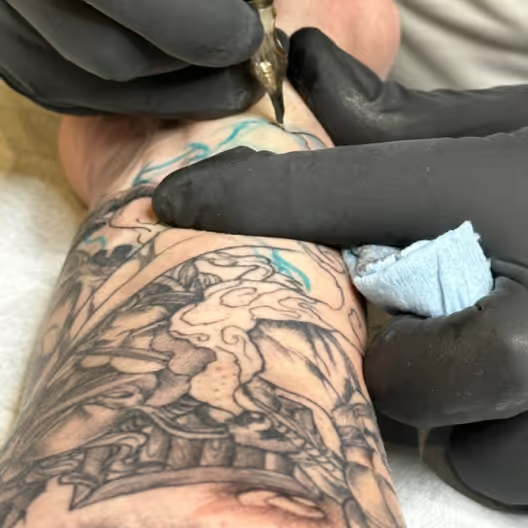

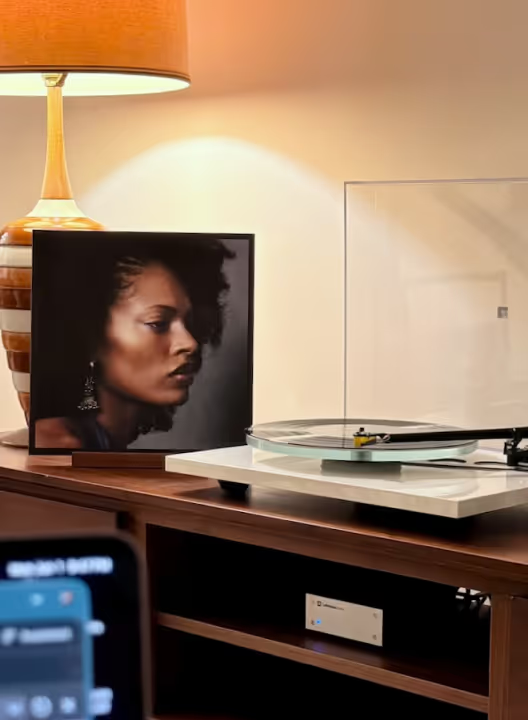
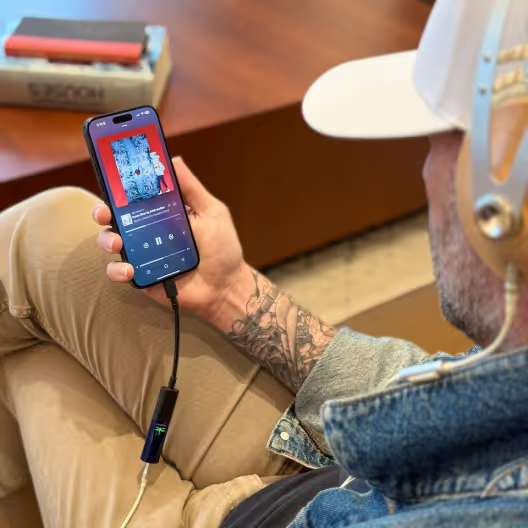


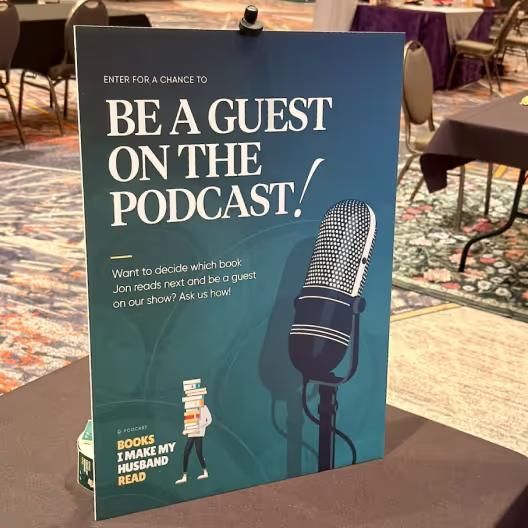


Outside the work, I'm putting that same curiosity toward considerably lower-stakes problems: co-hosting a podcast my wife roped me into called Books I Make My Husband Read — a good reminder that creativity doesn't clock out.
I also ride motorcycles, spin vinyl to unwind, and share a house with two senior dogs who have strong opinions about everything and no interest in compromise.
If you've made it this far, we should probably talk.
03
the resume
Senior Design Manager, Motive
Jul 2023 - Current
Motive is an technology company connecting and automating physical operations to transform the safety, productivity, and profitability of the businesses that power the physical economy.

Reframed the core assumption in fleet software — most products are built to catch drivers doing something wrong, so we asked what would happen if one did the opposite. Led 0-to-1 design of Driver Rewards through a proxy research strategy that worked around nearly impossible direct driver access, earning cross-functional stakeholder alignment on a product direction the company hadn’t tried before.
Led design simultaneously across two distinct product lines — Spend Management, a fintech product integrating fleet telematics and card payment data to detect fraud and unlock savings, and Workforce Management, a compliance and coaching platform built for drivers who rarely see a desk. Different users, different design problems, different stakeholder teams — required constant context-switching without losing depth on either side.
Created the conditions for the team to do their best work — setting clear product direction, running structured 1:1s, and making sure designers understood not just what to build but why it mattered. Guided both teams through the product’s growth from proof-of-concept to an enterprise-ready platform serving customers including FedEx.
Led the team’s shift toward AI-augmented design workflows — using tools like Claude and v0 to accelerate research synthesis, UI content writing, and rapid prototyping. Framed it not as an adoption initiative but as a genuine change in how the team thinks about speed and what deserves craft.
Staff Product Designer, Wrapbook
Nov 2021 - Mar 2023
Wrapbook is a SaaS platform handling onboarding, timecards, payroll, and insurance for production management in tv, commercials, and film.
Reframed a speed problem as a trust gap — between production managers and crew members whose rate, title, and union status were on the line. Designed a three-tier deferral model that met PMs where they were rather than forcing a behavior change — cutting average onboarding time from 2.5 minutes to under 60 seconds.
Defined product strategy for expanding Wrapbook’s payroll service into new business segments — partnering with product and engineering to set roadmaps and align stakeholders across squads. Supported launches for productions including Netflix, Warner Bros, and Biscuit.
Helped shape how a design team functions when it suddenly becomes one — joined during rapid hiring that took the org from one designer to five almost overnight. Worked alongside the design manager to help new designers find their footing, and helped the original designer navigate the shift from owning everything to finding where he could go deep.
Design Lead, High Alpha Venture Studio
Jul 2020 - Nov 2021
High Alpha Studio conceives, designs, and launches new B2B enterprise software companies.
Partnered directly with founding CEOs on product strategy and execution — going deep with a new domain, founding team, and lean engineering crew every three to six months across six Studio companies. Two companies from that period were later acquired — Pillar by Employ Inc. and The Juice by TechnologyAdvice, both in 2025 — and maintained active relationships with both after leaving the Studio.
Shaped the Designers in Residence program — mentoring early-career designers on what real product work actually feels like: how to present and advocate for their work, when to trade the ideal solution for the realistic one, and how to move fast without losing design integrity.
Staff Product Designer, OODA Health
Jan 2019 - Jun 2020
On May 13, 2021, Cedar announced agreement to acquire OODA Health. Cedar is a consumer platform that reduces administrative and billing friction, leading to better outcomes for providers, payers, and the people they serve.
Designed something durable enough to survive an acquisition — joined OODA at the stage most startups are at when they first bring on design — ambitious roadmap, minimal infrastructure, and a team that needed to ship. OODAPay achieved 90%+ customer satisfaction in healthtech billing. Cedar acquired OODA the following year, and the product still runs today as Cedar Pay.
Reduced front-end engineering time by nearly 40% — through a design system built in parallel with active product work, establishing the operational foundation a startup-stage team needed to move fast without creating debt on both sides of the handoff.
Co-founder, Mighty.
Jun 2015 - Jan 2019
Mighty is a digital strategy and design studio delivering web and mobile solutions that produce meaningful results through user-first experiences.
Co-founded a product design agency in Austin — grew to a team of six, generated $1.5M in revenue, and worked with clients from early-stage startups to Meta and Indeed, expanding internationally into the UK and Germany.
Built a design culture from intentional decisions — developed a coaching philosophy that connected feedback directly to individual growth, learned where coaching has limits, and when letting someone find a better fit is the more generous call for everyone involved.
Ran the business alongside the work — managing accounts, legal, contracts, and payroll while leading active client engagements. Led design strategy that earned a spot on the 2017 Entrepreneur 360™ list and recognition as a Leading Austin Agency by Clutch.co in 2018.
Made the call to close Mighty in 2019 — knowing when to end something you built is its own kind of leadership skill, and one that taught more about leading people through hard decisions than any client engagement could.
Recognition & speaking
Leading Austin Agency, Clutch.co, 2018 — for Mighty
Hosted Google Accessibility team, Austin Design Week 2018 — for Mighty
Entrepreneur 360™ list, 2017 — for Mighty
Panel speaker, SXSW 2014 — technology advancements in the legal industry
Member, InVision Design Leadership Forum — 2018-2020


